What’s the Big Idea? Concept-based Teaching and Learning
As educators, our goal is always to help students develop a meaningful understanding of ideas—to facilitate deep thinking that goes beyond what I call “Google-able” things to explore the “how” and “why” of the “what” itself. It’s a way of guiding students to come up with generalizations—an understanding of a “big idea”—by introducing questions and experiences that lead them to a broader understanding of a topic, subject, or event.
Concept-based teaching and learning is not new; schools overseas, for example, where I’ve lived and worked, have been doing it forever. But here in the U.S., education has largely been an accumulation of facts and details rather than a focus on what those facts and details come together to actually mean. With concept-based instruction, we center our teaching around transferable, timeless ideas—like power, ethics, economic systems, creativity—that hold up whether you’re analyzing ancient civilizations, writing poetry, or exploring how AI makes decisions.
Traditionally, we’d read a textbook, talk about it, write about it, and test our knowledge before moving on. However, concept-based instruction isn’t so linear; it’s a 3-D approach that combines skills and facts with broad, timeless, abstract ideas. The approach may be a bit messy at times (and maybe our takeaways aren’t what we thought they’d be when we started the lesson), but it is also, by nature, quite rigorous in how it engages critical thinking and requires students to question, create, discuss, and debate. Heady stuff! An example of what a concept-based lesson might look like:
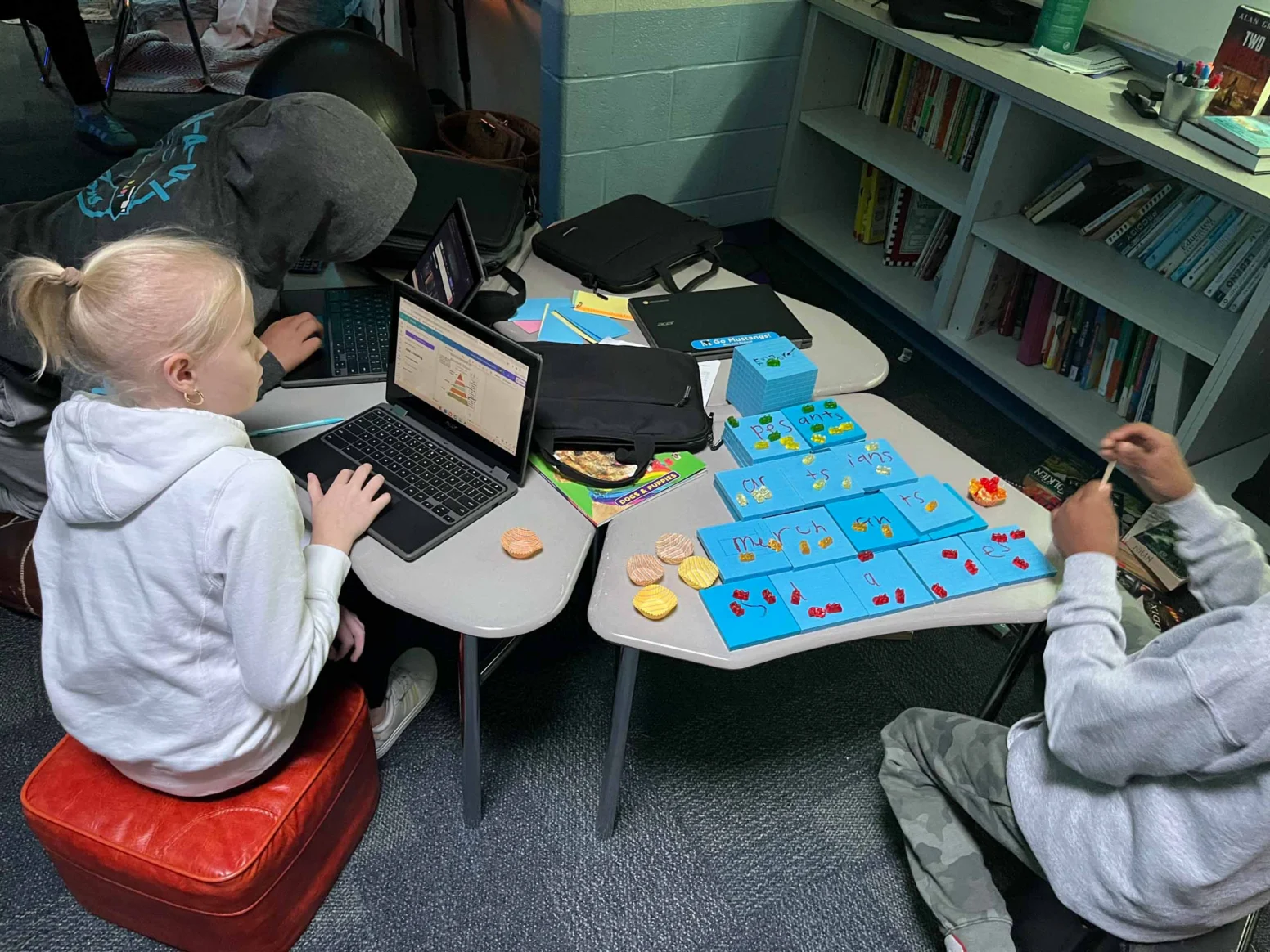
This spring, my sixth-grade students and I co-created an imaginary civilization—one rooted in the conceptual understandings we’ve built throughout the year. After months of exploring how geography shapes economic systems, how religion and government were often intertwined, and how social hierarchies can either stabilize or destabilize power, students applied these big ideas to design a fully realized civilization of their own.
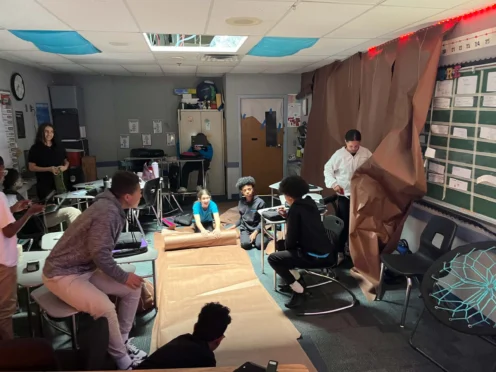
But this wasn’t just a thought experiment—we’re bringing it to life in our classroom. Students are transforming the physical space into the “ancient” world they imagined, complete with artifacts, structures, laws, and rituals. Each element reflects their understanding of essential concepts like power, belief systems, and resource distribution.
We’re culminating the project by inviting families to step into our civilization. Guests will be challenged to use clues to determine our civilization’s GRAPES (Geography, Religion, Achievements, Politics, Economy, Social Structure). Afterward, students will explain how their civilization was influenced by—and diverged from—the real ones we studied this year. The creativity, collaboration, and critical thinking on display are a testament to how concept-based instruction engages both the head and the heart.
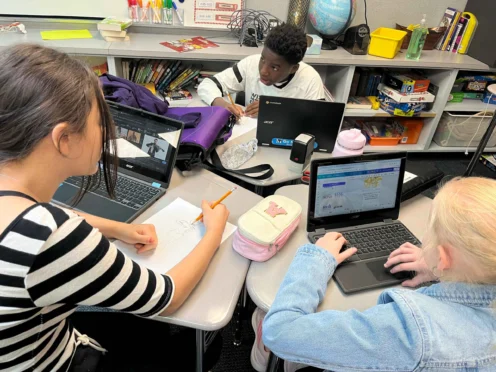
Concept-based instruction is highly compatible with McLean School’s model of teaching and learning in that there are many ways to come by and demonstrate knowledge and understanding. For students with ADHD, for example, small projects that allow them to focus on what is most appealing often lead to success. In a traditional classroom, students with dyslexia or organizational challenges are usually expected to master what’s hard for them before being able to embrace more elaborate, enriched thinking. At McLean, and particularly with concept-based instruction, we’re empowering students with tools and information and encouraging them to lean into what they know instead of what they don’t.
Here’s more of what I love about concept-based teaching and learning:
- It’s multi-disciplinary and can be applied to any subject. Social studies, for example, and issues of innovation or governance; science, and its concepts of evolution, energy, and environment; even math, looking at patterns, functions, and scale.
- It’s driven by a student’s own curiosity and creativity; the deeper the inquiry, the deeper the understanding. As a teacher, my goal is to lead them to takeaways, not provide them, which is why I find concept- based learning particularly rewarding. Related, it demonstrates a respect for the student voice and allows us to create space for that to happen.
- It’s a timeless approach. Tools change (AI, for example), but what students need to think about them will not.
- It requires getting comfortable with ambiguity, which is a life skill in itself! It also demands an open and nimble mind. You start with “what do you want the student to come away with?” and build the lesson from there.
- It’s a relevant, meaningful, sustainable, and comprehensive way to come at information.
- It’s appropriately demanding, not only because students are doing such deep exploration, but because they are engaged every step of the way. The outcome of a unit or lesson may look different than what it looked like when we were in school, but the scores and data are demonstrating that students are coming away with a robust, synthesized understanding of material.
Concept-based teaching can’t happen every moment of every day, and there is certainly a time and place for explicit instruction. But you’d be amazed at how many units of study lend themselves to this approach! In the end, our students are not only knowledgeable but also passionate and interested citizens, good advocates for self and others, and informed, insightful adults.