Supporting Students with ADHD Through Antecedent Management
In my 20 years as an instructor and administrator working with students who struggle with attention and executive functioning—as well as the teachers responsible for their education—I’ve seen firsthand the challenges that arise when the learning environment or routine lacks intentionality. For teachers and parents, this often leads to frustration and the misconception that the student doesn’t care about their education or relationships. For students, an inconsistent routine or unstructured environment can lower their academic frustration threshold, making it harder to develop grit. It can also significantly impact their self-esteem, which, in turn, affects their ability to initiate tasks and take positive risks. Exacerbating this issue is the fact that teenagers are developmentally programmed to want more independence and also question just about every decision that affects them.
So, how can parents and teachers preemptively mitigate the negative effects mentioned above while also allowing students to develop independence? While it may feel impossible, small changes in structure and routine can make a significant difference in helping students with ADHD succeed academically and beyond. This strategy is called Antecedent Management, and it is a method rooted in Applied Behavior Analysis (ABA). While ABA is often associated with Autism Spectrum Disorder, its core principles are highly effective in classroom settings for students with a diagnosis of ADHD or students who may have some challenges with attention.
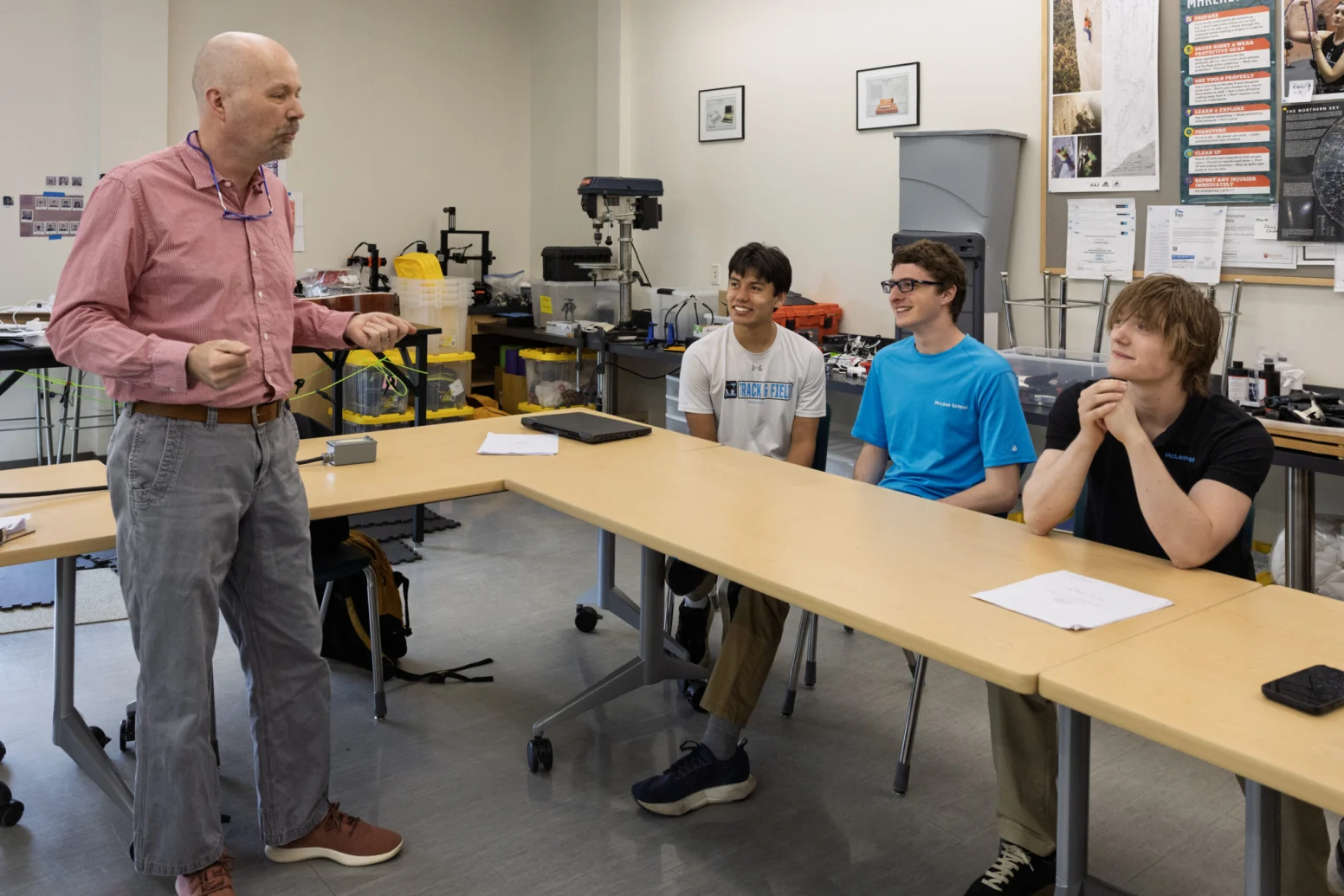
I count myself as extremely lucky to be working with my colleagues at McLean School, because philosophically, one of the hallmarks of how we educate students is by prioritizing the development of a depth of knowledge of who students are, how they learn, and fostering their success by adapting to their needs. So, inherently, our teachers practice Antecedent Management naturally. Understanding the theory behind the practice is important, and understanding why this practice is effective requires an overview of how behavior works.
Understanding the Three Phases of Behavior
ABA breaks down behavior into three key phases:
- Antecedent – The circumstances that set the stage for a behavior to occur.
- Behavior – The action a person takes to satisfy a need or impulse.
- Consequence – The result of the behavior. Importantly, a consequence isn’t necessarily negative — for example, the absence of hunger is a consequence of eating.
Antecedent Management focuses on proactively adjusting the environment and circumstances (the antecedent) to encourage positive behaviors and learning outcomes.
Picture this: A sixteen-year-old high school student starts their day in Debate and Public Speaking class. Students sit with a new partner daily to discuss an important topic. The teacher, also the Varsity Basketball Coach, lectures while pacing and handling a mini basketball. Pennants and basketball memorabilia line the walls. After the lecture, students spend the last 10 minutes practicing their new debate skills with their partner.
The student then moves through three more 90-minute classes. After a quick snack from the vending machine, they head to an athletics practice. Once home, they grab a bag of chips, toss their athletic clothes on the floor, and finish their homework on their bed.
For a neurotypical teen, this scenario is typical and unlikely to interfere with academic success. For a student with ADHD or challenges with executive functioning, however, it presents multiple challenges that could derail learning and growth, including but not limited to the following:
- The sound and movement of the mini basketball cause both visual and auditory distractions from the lesson.
- The lack of a common routine, particularly a consistent workspace, preys on the delay in adaptability development that teens with ADHD experience.
- The lack of nourishing food throughout the day also deters attention; the feeling of hunger signals a basic need of the body that even the most spectacular teaching cannot overcome.
- At home, a disorganized workspace or one paired with something other than learning creates a disconnect in the brain. When in bed, a person expects to sleep, or maybe watch Netflix; the brain is programmed to go into that ‘mode’ when in that setting – it is not prepared to learn or reinforce learning.
Applying Antecedent Management
Using the example above, here’s how teachers and parents can apply Antecedent Management to support students with ADHD:
For Teachers
Make the class routine predictable
- Predictability builds momentum and helps students with ADHD stay grounded. Even for teenagers who want so badly to ‘play by their own rules,’ a consistent and transparent routine will foster trust and predictability – thus creating a stronger foundation for the teacher-student dynamic.
Teach using multiple modalities (speaking, visuals, manipulatives, etc.)
- Engaging different senses makes content more accessible to all students, especially those with ADHD, dyslexia, and organizational challenges. It also provides ongoing ‘re-entry points’ for attention when a student gets distracted.
Keep it to 20 minutes
- Attention spans — for nearly all students — start to wane after 20 minutes. Breaking up instruction every 20 minutes or so helps students stay engaged. In most cases, McLean Upper School classes are 80 minutes. I generally encourage teachers to spend 10 minutes warming up, 20 minutes on new material, a short break (5-10 minutes), a 20-minute activity to synthesize the new material with already-established background information, and twenty minutes for student-driven Q&A or time to apply the acquired knowledge on their next assignment.
Minimize distractions and create a content-focused space
- The mini basketball the teacher used in the above example could be highly distracting for a student with ADHD. If it’s not reinforcing the lesson, it’s not necessary.
- Classroom visuals, posters, and books should reflect the subject matter. If a student’s mind wanders, relevant visuals can help re-engage their focus. While the pennants in the classroom are related to the teacher’s personal interests (a relationship builder), teachers should rethink decor based on content. Master teachers find a way to bridge their passions with their teaching content. For example, the Debate and Public Speaking teacher could post photos of prominent athletic figures engaging in debates on important topics (posters of prominent politicians and activists in their college athletic uniforms or materials promoting the National Basketball Social Justice Coalition immediately come to mind). This would redirect to the topics at hand and create a chance for social connections and discussion with the students.
For Parents
Help students develop and stick to routines at home
- Consistency helps students with ADHD develop executive functioning skills.
Designate a specific study space
- When homework happens in the same place, the brain associates that space with focus and learning.
- Have the area stocked with all necessary supplies, so that there’s no need to leave after work is started.
Use the Pomodoro method
- Encourage students to work in focused 20-25 minute sessions with short breaks to reset attention and motivation.
Schedule breaks as a reward, and encourage movement!
- This reinforces work habits while providing a mental reset.
- Stretching, walking, and dancing around can do wonders for making the most of the ‘reset value’of the break.
MOST IMPORTANTLY – Empower your child
- Include them as active participants in the conversations where decisions about their routine and environment are made.
- While this may not seem like Antecedent Management, the part of the situation that we sometimes don’t consider is that a student’s mindset and receptiveness to plans affecting their lives (especially in areas where they may have lower self-esteem) is a significant factor in their success.
- Collaborate with them to come up with ideas to address areas of need, predict where plans might not work, and devise ways to address those areas – it’s best to lead this conversation with questions instead of identifying areas of growth for them.
- Help them feel like you are taking these steps with them, not imposing the steps on them.
Antecedent Management is a powerful tool for supporting students with ADHD by proactively adjusting the environment to encourage positive behaviors and learning outcomes. By creating predictable routines, using multimodal teaching methods, minimizing distractions, and structuring content-focused spaces, teachers can help students stay engaged and focused.
Parents can reinforce these strategies at home by establishing consistent study routines, using timers for focused work sessions, and encouraging regular breaks. Minor, intentional adjustments can significantly enhance the academic success and overall well-being of students with ADHD. Antecedent Management isn’t about forcing students with ADHD to adapt to the environment — it’s about creating a setting that maximizes a student’s strengths (Abilities Model® in action!
One of the most beneficial characteristics of Antecedent Management is that it is not complicated. Thus, families can (and should) work collaboratively to devise the best ways of employing this strategy to support academic growth.
To learn more about how our teachers utilize Antecedent Management, visit McLean today.